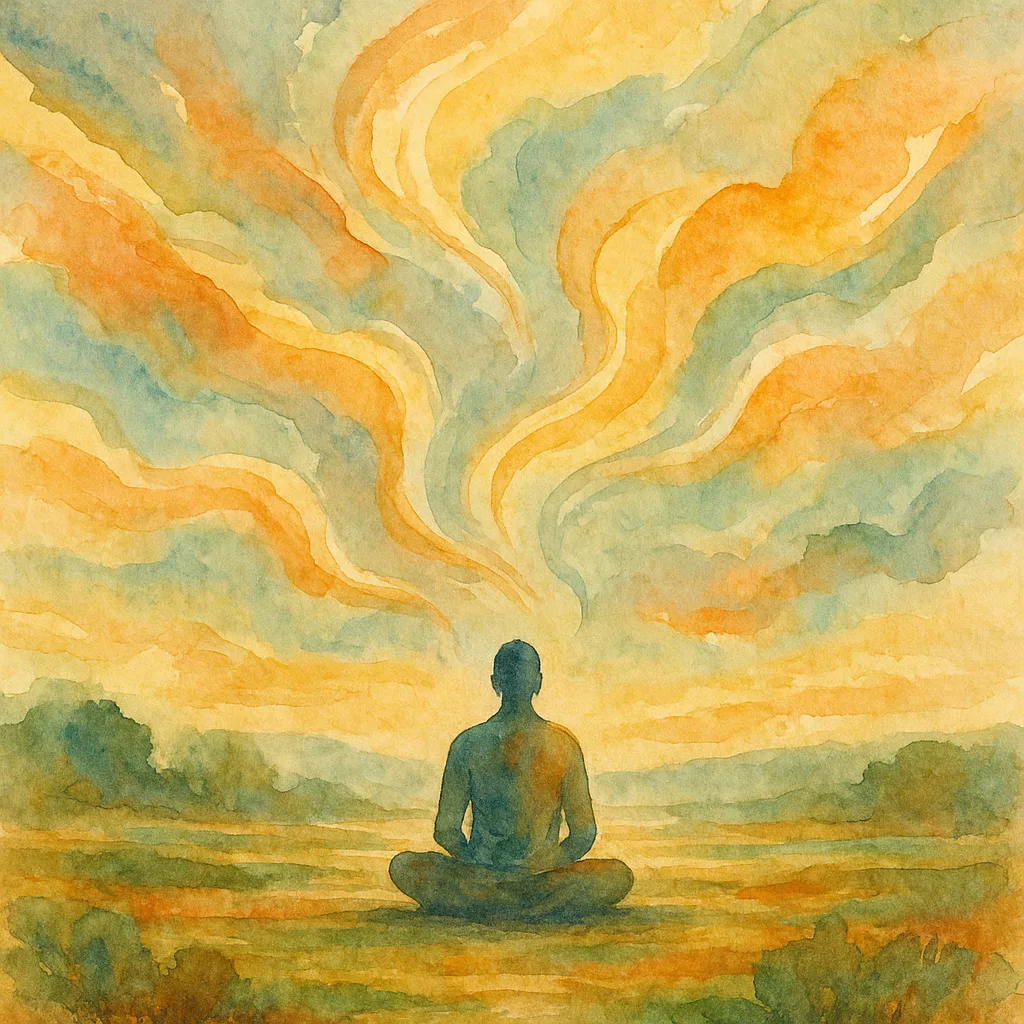
Transcendental Meditation: A Practical Starter Guide
Transcendental Meditation, usually called TM, is often presented as something you need to learn through a paid course. The official TM organization teaches a specific branded method with personal instruction, follow-up sessions, and a privately assigned mantra.
That training may be useful, but the price can put it out of reach. If you cannot afford it, you can still begin a simple mantra meditation practice that captures much of the everyday value people are usually seeking: a quiet daily routine, a neutral mental anchor, and a reliable way to settle the nervous system.
This guide is not a substitute for official TM instruction. It is a practical way to start meditating now without waiting for perfect conditions.
A useful warning before starting: meditation can feel subtle, boring, dreamy, or surprisingly deep. None of those prove you are doing it wrong or doing it perfectly. The safest beginner posture is curiosity without scorekeeping.
The appeal is not mystical complexity. Most of us spend the day on the surface of the mind, pushed around by alerts, obligations, stress, loneliness, and a constant pressure to do more. A short mantra practice gives the mind one simple place to rest. Over time, that calm can begin to carry into the rest of the day instead of staying limited to the session itself.
The core idea
Mantra meditation is simple:
- Sit comfortably.
- Close your eyes.
- Silently repeat a short mantra in the mind.
- When attention drifts, gently return to the mantra.
- Continue for a set amount of time.
The goal is not to force the mind into silence. The goal is to build a low-friction habit of returning.
One useful way to picture it: the mind is like the ocean. On the surface, a storm can make everything look chaotic. Under the surface, there is stillness. Meditation is not about controlling every wave. It is about learning how to drop beneath the chop for a few minutes and remember that the storm is not the whole ocean.
The basic loop is:
mantra → thought → noticing → gentle returnThat loop is the practice.
What “effortless” actually means
The hardest instruction for beginners is usually the easiest-sounding one: do less.
Effortless does not mean careless. It means you are not trying to manufacture a special state. You are not clenching around the mantra, analyzing every image, or checking every thirty seconds to see whether meditation is “working.”
A useful test:
If the mantra feels like a command, soften it.
If it feels like a faint sound in the distance, you are closer.
You can think the mantra clearly at first. Then let it become quieter if it wants to. If it stays clear, fine. If it becomes vague, fine. If it disappears and you realize you were thinking, dreaming, or listening to a sound outside the room, that is also fine. The instruction is always the same: once you notice, gently favor the mantra again.
“Favor” is a better word than “return.” Return can sound like you were bad for leaving. Favor means you lightly incline attention back toward the mantra without making a big event out of it.
A simple daily routine
Start smaller than you think you need to. Consistency matters more than duration.
If 10 minutes feels like too much, begin with five. The first win is not having a profound experience. The first win is proving to yourself that you can sit down, close your eyes, and give the practice a real chance without turning it into another self-improvement project.
Week 1
- Sit once per day.
- Meditate for 10 minutes.
- Use the same mantra each session.
- Do not judge whether the session was “good.”
Week 2
- Increase to 15 minutes once per day.
- If it feels natural, add a second short session in the late afternoon.
Week 3 and beyond
Aim for the classic TM-style rhythm if it fits your life:
- 20 minutes in the morning.
- 20 minutes in the late afternoon or early evening.
If twice a day is too much, do once a day. A sustainable practice beats an ideal practice you abandon.
How to sit
You do not need a special cushion or posture.
A chair is fine. A couch is fine. Sitting on the floor is fine if it is comfortable.
Use these rules:
- Keep the body comfortable and relaxed.
- Let the back be supported if needed.
- Rest hands wherever they naturally fall.
- Close the eyes.
- Set a gentle timer.
- Sit quietly for a minute or two after the timer ends.
Do not turn posture into another project. The point is to remove friction.
Before starting the mantra, take a few slow breaths. Three deep breaths is enough: inhale fully, pause briefly, then exhale. After that, do a quick scan from head to toe. Notice tension, aches, emotions, or restlessness without trying to fix them. If one sensation is loud, sit with it for a moment before beginning the mantra.
How to pick a mantra
In official TM, the mantra is assigned by a teacher. If you are practicing on your own, choose a mantra that is:
- Short.
- Easy to repeat silently.
- Emotionally neutral.
- Not tied to a goal, person, memory, or belief you are trying to force.
- Soft-sounding rather than harsh.
Good starter options:
so-humomahumshamramayamhreeam
My suggested starter mantra is:
so-humIt is simple, neutral, and easy to remember. Some traditions pair so with the inhale and hum with the exhale, and that can be a useful way to learn the sound at first. But if your goal is a TM-style practice, do not make the breath a metronome. Let the mantra be light and easy.
Should the mantra follow the breath?
This is one of the most common beginner questions, especially if you have done mindfulness, Zen, Vipassana, yoga breathing, or any practice where the breath is the main anchor.
Breath awareness is a real meditation method. So is mantra repetition. But they are not exactly the same method.
In a TM-style practice, the breath is allowed to do whatever it is doing. You do not need to ignore it, and you do not need to suppress awareness of it. But you also do not need to follow each inhale and exhale on purpose.
The mantra is not meant to be a chant, a count, or a perfectly timed rhythm. It is closer to a faint sound that appears in the mind. Sometimes it may be clear. Sometimes it may be vague. Sometimes it may come quickly. Sometimes slowly. Sometimes it may disappear for a while.
A helpful distinction:
Gentle fallback: take a few natural breaths, settle, then favor the mantra again.
Over-control: matching every mantra repetition to inhale and exhale so tightly that the practice becomes a concentration exercise.
There is nothing morally wrong with synchronizing a mantra and the breath. Many traditions intentionally do that. It can be calming and structured. It is simply a different flavor of practice than the effortless TM-style approach.
If you notice you have started managing the breath, do not turn that into another mistake to fix. Just let the breath fade into the background and lightly favor the mantra again.
Less like this:
Inhale: mantra.
Exhale: mantra.
Keep the rhythm perfect.
More like this:
The breath breathes.
The mantra comes and goes.
When I notice I am off somewhere else, I gently favor the mantra.
If breath synchronization gives you stability, experiment rather than argue with yourself. Try one week using the breath as you normally do, then one week letting the mantra float freely without timing it. After each session, jot down whether the practice felt calm, effortless, and refreshing. Your actual experience over multiple sittings matters more than one theoretical answer.
The 30-day rule
Pick one mantra and keep it for 30 days.
Do not change the mantra because one session felt restless. Do not keep searching for the “right” sound. That turns mantra selection into another distraction.
For 30 days, the practice is:
Same chair if possible.
Same time if possible.
Same mantra.
No evaluation.
At the end of 30 days, decide whether to continue, adjust the schedule, or choose a different mantra.
What to do during the session
Once your eyes are closed, silently introduce the mantra.
Do not chant it out loud. Do not synchronize it perfectly. Do not force it to be clear.
Let it be faint. The mantra should feel more like something gently running in the background than something you are gripping with effort.
Sometimes the mantra may feel crisp. Sometimes it may become vague. Sometimes it may disappear and you may realize you have been thinking for several minutes.
That is normal.
When you notice you have drifted, return gently.
You may return five times, ten times, or twenty times in one sitting. That is not a problem. Noticing the drift and returning is the rep.
Not:
I failed. I need to concentrate harder.Instead:
Thinking happened. Back to the mantra.In the last minute or two, you can let the mantra fade and simply sit quietly. Before getting up, bring attention back to the body, feel your hands and feet, wiggle your fingers, and open your eyes slowly.
A five-minute version
Use this when you are busy, skeptical, or just trying to build the habit.
0:00–0:30  Sit comfortably, close your eyes, take three slow breaths.
0:30–1:00  Scan the body from head to toe without judging what you notice.
1:00–4:00  Repeat the mantra silently and lightly.
4:00–5:00  Let the mantra fade, sit quietly, then return slowly.
If you have more time, stretch the mantra portion to 10, 15, or 20 minutes. The structure can stay the same.
What may happen as you get deeper
Once the practice becomes familiar, the mantra may not stay crisp for the whole session. It can become faint, abstract, or almost soundless. You might also notice brief dream-like images, memory fragments, body twitches, a head nod, or a sense that you went somewhere and came back.
For a beginner, this can be confusing because it does not feel like the neat version of meditation people describe. But it is common. The mind is settling, the body is resting, and material that was below the surface can bubble up.
Treat these experiences as weather, not instructions.
If dream-like images appear:
- Do not analyze them during the session.
- Do not try to push them away.
- Do not decide they are spiritually important or spiritually dangerous.
- When you realize you are caught in them, gently favor the mantra again.
If the mantra fades:
- Let it fade if it fades naturally.
- Do not strain to keep it loud.
- If you notice the mantra is gone, reintroduce it lightly.
- If it fades again, repeat the same gentle process.
If the session feels sleepy:
- That may simply mean you are tired.
- Stay seated rather than lying down.
- Meditate earlier in the day if evening sessions keep turning into naps.
- Consider sleep debt before turning the experience into a meditation problem.
Head nods, twitches, and drifting toward sleep
A head nod during meditation is usually not mysterious. As the body relaxes, the neck releases. If you are tired, you may briefly slip toward sleep, the head drops, and the small jerk wakes you back up.
That does not mean the session failed. It may mean the body needed rest more than it needed a clean meditation experience.
What to do:
- Notice it without frustration.
- Sit upright again.
- Take a few easy breaths if needed.
- Lightly return to the mantra.
If it happens often, adjust the setup before blaming yourself:
- Meditate after you have been awake for a little while, not immediately after dragging yourself out of bed.
- Avoid meditating right after a heavy meal.
- Use a chair with enough support that your body can relax without collapsing.
- If you are consistently sleep-deprived, prioritize sleep. Meditation is not a replacement for it.
There is no prize for staying perfectly still. Small movements, swallows, itches, and posture adjustments are normal. Handle them quietly and return.
What progress looks like in stages
TM-style practice is not a video game with levels you unlock. Progress is usually non-linear. A peaceful session one day can be followed by a noisy session the next. Still, beginners often move through a few recognizable phases.
1. The mechanical phase
At first, the practice feels deliberate. You are remembering the instructions, wondering whether the mantra is right, checking the timer, and noticing how loud the mind is.
This is not a problem. You are building the container.
Beginner guidance:
- Keep the session short enough that you will repeat it tomorrow.
- Do not search for signs of depth.
- Learn the rhythm: sit, close eyes, mantra, drift, notice, return, rest, re-enter.
2. The settling phase
After the routine becomes familiar, the mantra may start to soften on its own. You may feel heavier, quieter, floatier, or more inward. Thoughts may still be present, but they may feel less sticky.
Beginner guidance:
- Let the mantra become subtle.
- Do not chase the quiet.
- If you become aware that you are thinking, return without commentary.
3. The unstressing or processing phase
Some sessions may bring vivid thoughts, emotional residue, dream fragments, body releases, or a sense of dipping in and out of sleep. In TM language this is often described as “unstressing.” In plain language, the nervous system may be processing fatigue and stored tension while the mind is less defended than usual.
Beginner guidance:
- Let the content pass.
- Do not make dream interpretation part of the sitting.
- If something emotionally intense keeps coming up, shorten the session and ground yourself afterward.
- If meditation repeatedly worsens anxiety, panic, dissociation, or depression, pause and get support from a qualified person rather than forcing through it.
4. Brief gaps
You may sometimes notice a gap: no clear mantra, no obvious thought, no image, but also not ordinary sleep. It may feel like you were simply present, then afterward you realize time passed.
Do not try to recreate it. The moment you make it the goal, you add effort.
Beginner guidance:
- Appreciate it if it happens.
- Do not measure every session against it.
- Go back to the ordinary instruction next time.
5. Integration into daily life
The more useful sign of progress is not what happens with your eyes closed. It is what changes with your eyes open.
Look for small, practical changes:
- You recover faster after stress.
- You interrupt fewer conversations with your own anxiety.
- You are less pulled around by every notification.
- You pause before reacting.
- You sleep a little easier.
- You crave the quiet routine because it feels stabilizing, not because it is dramatic.
That is the kind of progress worth trusting.
The best-case scenario
The best-case outcome is not that every meditation becomes blissful or thought-free. The better outcome is that the practice becomes reliable.
During a session, a good outcome might look like this:
The mantra gets quieter.
Thoughts come and go.
The body settles.
You stop trying so hard.
For a few moments, there is simple awareness.
Then thoughts return.
You gently favor the mantra again.
After a session, a good outcome might look like this:
You feel a little clearer.
You move more slowly for a few minutes.
You are less reactive.
You do the next normal thing with slightly more ease.
Long term, the best case is that the quiet becomes more available during ordinary life. You still have stress, deadlines, grief, irritation, and distraction. But they do not occupy the whole sky as easily.
How to end and re-enter
The last minute matters.
When the timer rings, do not pop up immediately. Keep your eyes closed. Let the mantra go. Notice the body. Feel the chair, the hands, the feet, the room.
Use a simple re-entry:
Timer rings.
Let the mantra fade.
Sit quietly for 60–120 seconds.
Take one normal breath.
Notice the body.
Open the eyes slowly.
Stand up when ready.
This helps prevent the jarring feeling of being pulled from a deep or dreamy state straight into tasks, messages, or conversation.
How to troubleshoot beginner sessions
“I keep thinking the whole time”
That is normal. The practice is not to prevent thought. The practice is to notice and return.
“I lose the mantra for long stretches”
Also normal. When you notice, reintroduce it lightly. Do not punish the drift.
“I feel like I am just falling asleep”
You might be tired. Try meditating earlier, sitting more upright, or shortening the session. Also check whether you are using meditation to compensate for not sleeping enough.
“I had weird images or dreams”
Let them pass. They may be memory, fatigue, imagination, or the mind hovering near sleep. Do not build the practice around them.
“I had a peaceful session and now I want that every time”
That desire is understandable, but it becomes a trap. The next session may be ordinary. Let it be ordinary.
“I feel emotional afterward”
Sit quietly, drink water, walk slowly, or journal a few lines. If strong emotion keeps surfacing, reduce duration and consider getting support. Meditation should not become a private endurance contest.
A practical first-month mindset
For the first month, your only job is to become the kind of person who sits.
Do not optimize the mantra. Do not chase transcendence. Do not compare your experience to advanced descriptions. Do not decide the practice is working only if something unusual happens.
Use this rule:
If I sat, noticed, and gently returned, I practiced correctly.That is enough to begin.
Common mistakes
Trying to clear the mind
A busy mind does not mean meditation failed. Thoughts are part of the process.
Repeating the mantra too forcefully
The mantra is not a hammer. Use it lightly.
If you feel like you are concentrating hard, soften. The practice is closer to allowing than forcing.
Choosing a loaded phrase
Avoid mantras like I must relax, be successful, or stop worrying. Those phrases create effort and expectation.
Changing mantras constantly
Pick one and stay with it long enough to let the habit stabilize.
Meditating only when stressed
Meditation works best as a routine, not just an emergency tool.
Ending abruptly
After the timer ends, sit quietly for one or two minutes before opening your eyes and standing up.
Give the nervous system a gentle re-entry. A hard stop can make the session feel jarring, especially if you were finally settling down.
Waiting until life is calm
You do not need perfect conditions. A normal room, a chair, and five quiet minutes are enough to begin.
What to track
Progress is not always dramatic. Often it looks ordinary:
- You sit more consistently.
- You notice thoughts sooner.
- You recover from stress a little faster.
- You become less reactive.
- You start craving the quiet part of the day.
- The calm from the session lingers a little longer afterward.
Some sessions will feel peaceful. Some will feel like a stream of unfinished thoughts. Both count.
Track behavior, not mystical achievement.
Good tracking questions:
- Did I sit today?
- Did I give myself a minute or two to re-enter afterward?
- Am I a little more aware of my reactions during the day?
- Am I practicing gently, or turning meditation into another performance metric?
Bad tracking questions:
- Did I transcend?
- Was today deeper than yesterday?
- Did I have visions?
- Did I reach the next level?
Those questions create tension. Tension is the opposite of the method.
A simple 30-day plan
Days 1–7
10 minutes every morning
mantra: so-hum
Days 8–14
15 minutes every morning
optional: 10 minutes late afternoon
Days 15–30
20 minutes every morning
optional: 20 minutes late afternoon
Track only whether you sat. Do not score the session quality.
Example tracker:
Day 1: sat
Day 2: sat
Day 3: missed
Day 4: sat
That is enough.
If you want official TM later
If money becomes less tight, you can still take the official TM course later. Starting a basic mantra practice now does not prevent that.
The useful question for today is not whether you can access the perfect version of the practice.
The useful question is:
Can I sit quietly for 10 minutes today and gently return to one simple sound?That is a complete beginning.
Source notes used for this expansion
Additional guidance in this draft was expanded from the TM notes folder in Google Drive, especially notes on breath synchronization, dream-like imagery, head nodding, sleepiness, signs of progress, and the difference between chasing an experience and gently favoring the mantra.